
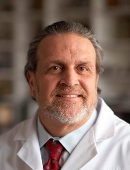
Dennis S. Charney
- DEAN Mount Sinai School of Medicine
- PROFESSOR Psychiatry
- PROFESSOR Neuroscience
- PROFESSOR Pharmacology and Systems Therapeutics
Print Profile
Specialty
Certifications
Psychiatry, American Board of Psychiatry and Neurology
Education
MD, Penn State College of Medicine
Residency, Psychiatry
Yale University School of MedicineFellowship, Biological Psych.
Connecticut Mental Health Center
Biography
- Dennis S. Charney, MD, is a world expert in the neurobiology and treatment of mood and anxiety disorders. He has made fundamental contributions to the understanding of neural circuits and neurochemistry related to human anxiety, fear, mood and discovery of new treatment for mood and anxiety disorders. He later expanded this area into pioneering research related to the psychobiological mechanisms of human resilience to stress.
Early in his career, Dr. Charney led a team that determined that the biology of human anxiety disorders were characterized by excessive noradrenergic activity and dysfunction in specific neural circuits including the prefrontal cortex, amygdala, and hippocampus. His work in depression led to new hypotheses regarding the mechanisms of antidepressant drugs and discovery of new and novel therapies for treatment resistant depression including Lithium and Ketamine, which works within hours.
After decades of work on the biology of anxiety, depression, and post-traumatic stress disorder (PTSD), Dr. Charney and colleagues have turned their attention toward investigating the psychobiological mechanisms of human resilience to stress. They have found specific hormones and peptides, which contribute to resilience and have identified a prescription for enhancing human resilience.
Much of this work was carried out over two decades at Yale University School of Medicine, and during four years at the National Institute of Mental Health (NIMH). It continues today at Mount Sinai School of Medicine where he serves as the Anne and Joel Ehrenkranz Dean of Mount Sinai School of Medicine and Executive Vice President for Academic Affairs of The Mount Sinai Medical Center. He mentors the faculty and students in the institution’s Mood and Anxiety Disorders Program, a robust group where researchers are currently investigating biosignatures—a collection of genetic, biochemical and brain imaging based biomarkers—with a goal of better understanding their role in guiding clinical treatment. Others teams are conducting randomized clinical trials with several investigational drugs with the hope that they will produce rapid and more effective relief of depressive symptoms.
In 2006, Dr. Charney unveiled Mount Sinai’s $2.25 billion strategic plan, laying the foundation for the robust 15-institute structure that Mount Sinai is known for today. Today these institutes are hubs of scientific and clinical enterprise, working together to challenge the limits of science and medicine. Within—and across—them, scientists and physicians, who themselves are members of the teaching faculty, can facilitate the development of effective treatments for the most serious medical conditions. Mount Sinai now stands with the top medical schools in the United States as a beacon for advances in education, transformative biomedical research, and personalized, compassionate, world-class clinical care.
During Dr. Charney’s tenure, the Mount Sinai rose to and has maintained its strength among the top 20 institutions in National Institutes of Health (NIH) funding, and it currently ranks third in funding per faculty member from the NIH. The institution also is listed consistently among the top 20 medical schools in the country according to U.S. News & World Report, and in 2009, it received the Spencer Foreman Award for Outstanding Community Service from the Association of American Medical Colleges.
Even within the confines of tight city streets, the campus itself has grown—and continues to grow. The Center for Science and Medicine, due to open next year, will provide over a half-million square-feet of state-of-the-art research and clinical space. This will allow Mount Sinai to expand its capabilities as a center for innovation and discovery.
Dr. Charney's career began in 1981 at Yale, where, within nine years, he rose from Assistant Professor to Professor of Psychiatry, a position he held from 1990 to 2000. While there, he chaired the NIMH Board of Scientific Counselors, which advises the institute’s director on intramural research programs. In 2000, NIMH recruited Dr. Charney to lead the Mood and Anxiety Disorder Research Program — one of the largest programs of its kind in the world — and the Experimental Therapeutics and Pathophysiology Branch. That year he also was elected to the Institute of Medicine of the National Academy of Sciences. His scientific research has been honored by every major award in his field.
In 2004, Mount Sinai recruited Dr. Charney as Dean of Research. Two years later, he was appointed Dean for Academic and Scientific Affairs for Mount Sinai School of Medicine and Senior Vice President for Health Sciences of The Mount Sinai Medical Center. In 2007, he became the Dean of Mount Sinai School of Medicine and Executive Vice President for Academic Affairs of the Medical Center, and the following year, he was named the Anne and Joel Ehrenkranz Dean of Mount Sinai School of Medicine. A prolific author, Dr. Charney has written more than 700 publications, including groundbreaking scientific papers, chapters, and books. He has authored a many books, including Neurobiology of Mental Illness (Oxford University Press, USA, Third Edition, 2009); The Peace of Mind Prescription: An Authoritative Guide to Finding the Most Effective Treatment for Anxiety and Depression (Houghton Mifflin Harcourt, 2004); The Physicians Guide to Depression and Bipolar Disorders (McGraw-Hill Professional, 2006), and Resilience and Mental Health: Challenges Across the Lifespan (Cambridge University Press, 2011). Dr. Charney’s most recent book Resilience: The Science of Mastering Life’s Greatest Challenges, for lay audiences is due out in spring 2012 (Cambridge University Press).
Curriculum Vitae (CV)
In the News
Dr. Charney and his work diagnosing and treating depression were recently profiled in The Daily News feature The Daily Check Up. View the PDF
Clinical Trials
Industry Relationships
Physicians and scientists on the faculty of Mount Sinai School of Medicine often interact with pharmaceutical, device and biotechnology companies to improve patient care, develop new therapies and achieve scientific breakthroughs. In order to promote an ethical and transparent environment for conducting research, providing clinical care and teaching, Mount Sinai requires that salaried faculty inform the School of their relationships with such companies.
Dr. Charney did not report having any of the following types of financial relationships with industry during 2011 and/or 2012: consulting, scientific advisory board, industry-sponsored lectures, service on Board of Directors, participation on industry-sponsored committees, equity ownership valued at greater than 5% of a publicly traded company or any value in a privately held company. Please note that this information may differ from information posted on corporate sites due to timing or classification differences.
Mount Sinai's faculty policies relating to faculty collaboration with industry are posted on our website at http://www.mssm.edu/about-us/services-and-resources/faculty-resources/handbooks-and-policies/faculty-handbook. Patients may wish to ask their physician about the activities they perform for companies.
Annenberg Building Floor 21 Room 86
1468 Madison Avenue
New York, NY 10029
Fax: 212-824-2302


